
Product notes ·
A trade review starts with a plan
Why the outcome alone cannot explain a trading decision.
An outcome is only one part of the record
A profitable trade can depart from its plan, and a losing trade can follow it. Looking only at the result makes those two cases hard to distinguish. For the review workflow we are designing, the plan is a reference point. It helps separate what was intended from what was actually recorded.
Keep the comparison concrete
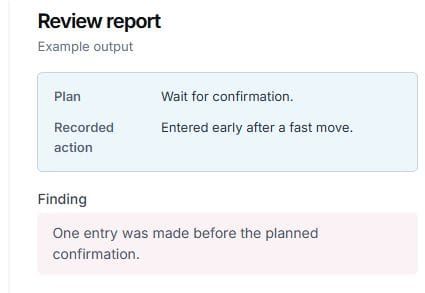
Consider a sample note: “Planned to wait for confirmation. Entered early after a fast move.” The useful observation is narrow: the recorded entry happened before the planned confirmation. That sentence does not explain why the trader acted, and it does not establish that waiting would have produced a better result. Those are separate questions.
Ask what the record can support
A review can place the intended entry condition beside the action in the note, link to that note, and ask what changed in between. If the record does not contain the answer, the agent should leave the question open. A plausible explanation should not be presented as a fact about the trader.
A design principle, not a scoring system
We are using this distinction to shape ThinkerGain’s product concept. The aim is a review that a person can inspect and use, rather than a score that hides the underlying judgment. The example is sample data and illustrates a proposed workflow; the product is still in development.
Four questions for a short review
Read the plan and the entry note beside each other. Then ask:
- What condition was I waiting for?
- What action did I actually record?
- Did I record a reason for changing the plan?
- What information is missing from this review?
The last question matters. A timestamp may establish the order of events without explaining the decision. If the reason is missing, add a follow-up note and distinguish that later recollection from the note written at the time. This keeps the review useful without making the original record say more than it does.